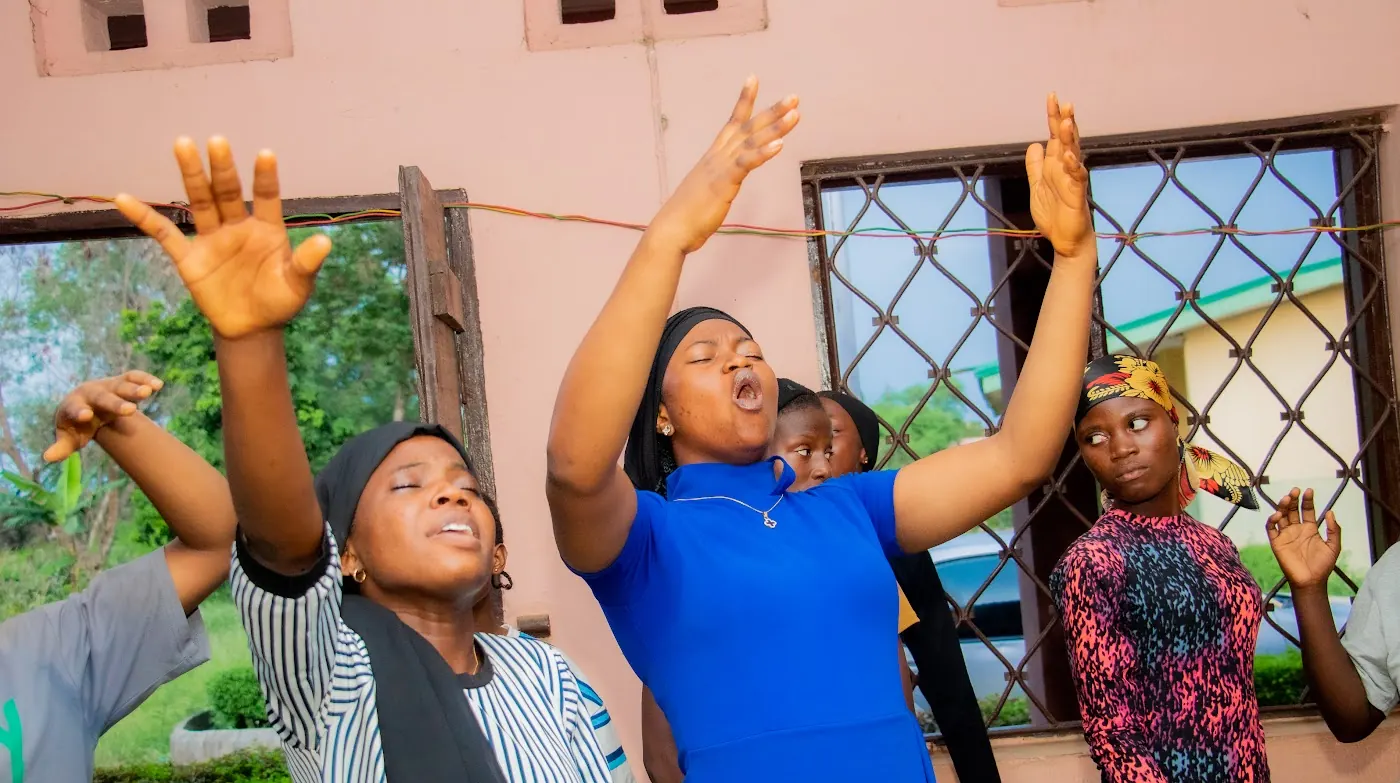

Thanksgiving is more than good manners toward God. It is a commanded, faith-building act of remembering what He has done (1 Thessalonians 5:18). The Bible's memorials, from Ebenezer to the Passover, teach us to pause, look back and give thanks, which is why churches celebrate anniversaries.
Most of us were taught as children to say "thank you." It is one of the first lessons of good manners. Yet in the Bible, thanksgiving is much more than manners. It is a command, a weapon against worry, a pathway into God's presence, and a habit of the heart that changes how we see our lives.
In this article we will explore what the Bible teaches about thanksgiving: why God asks for it, the stories that show its power, how remembering shapes our faith, and why a church anniversary (like the one Adoration New Life Ministry holds each year) is not simply a party but a spiritual act with deep biblical roots. By the end, we hope you will see thanksgiving not as a duty, but as one of the great joys of the Christian life.
A command, not just a suggestion
Paul writes, "In every thing give thanks: for this is the will of God in Christ Jesus concerning you" (1 Thessalonians 5:18). Notice the phrase: this is the will of God. When we wonder what God's will is for our lives, here is one clear answer: give thanks. Not "give thanks for everything" in the sense of pretending that tragedy is good, but give thanks in everything, meaning that no circumstance cancels the reasons we have to thank Him.
Throughout the Psalms the command is repeated: "O give thanks unto the LORD, for he is good: for his mercy endureth for ever" (Psalm 107:1). "Enter into his gates with thanksgiving, and into his courts with praise: be thankful unto him, and bless his name" (Psalm 100:4). In Colossians, Paul says, "And whatsoever ye do in word or deed, do all in the name of the Lord Jesus, giving thanks to God and the Father by him" (Colossians 3:17).
Why does God ask this of us? Not because He is insecure or in need of flattery, but because thanksgiving is good for us and true. It aligns us with reality: every good thing we have is a gift (James 1:17), and the Giver deserves acknowledgment.
What thanksgiving does for us
It turns our eyes from ourselves to God
Complaint looks at what we lack. Thanksgiving looks at what God has given. It shifts our focus from our problems to the Provider, from self-centredness to God-centredness.
It builds faith
When you recall how God has helped you before, it becomes easier to trust Him with what is ahead. David often did this. Before facing Goliath, he reminded Saul of how God had delivered him from the lion and the bear (1 Samuel 17:34-37). Remembering fuels courage.
It guards against pride
Moses warned Israel before they entered the Promised Land: "And thou say in thine heart, My power and the might of mine hand hath gotten me this wealth. But thou shalt remember the LORD thy God: for it is he that giveth thee power to get wealth" (Deuteronomy 8:17-18). Gratitude keeps us humble by reminding us we did not do it alone.
It protects against anxiety
"Be careful for nothing; but in every thing by prayer and supplication with thanksgiving let your requests be made known unto God. And the peace of God, which passeth all understanding, shall keep your hearts and minds through Christ Jesus" (Philippians 4:6-7). Notice that thanksgiving is part of how we pray about our worries. It is the bridge from anxiety to peace.
It opens the door to God's presence
Psalm 100:4 describes thanksgiving as the entrance to His gates. When we come thankful, our hearts are prepared for worship.
It brings joy
Few things steal joy faster than ingratitude, and few things restore it faster than thanks. As we count our blessings, we find that we have more than we realised.
Learning from the ten lepers
One of the Bible's most moving lessons on thanksgiving is found in Luke 17. Ten men with leprosy, outcasts living at a distance from everyone, cried out to Jesus, "Jesus, Master, have mercy on us" (Luke 17:13). He told them to go and show themselves to the priests, and as they went, they were healed.
What happened next? "And one of them, when he saw that he was healed, turned back, and with a loud voice glorified God, And fell down on his face at his feet, giving him thanks: and he was a Samaritan" (Luke 17:15-16). Jesus asked, "Were there not ten cleansed? but where are the nine?" (Luke 17:17).
All ten received a miracle. Only one returned. And to that one, Jesus said, "Arise, go thy way: thy faith hath made thee whole" (Luke 17:19). Many Bible teachers note that the others were cleansed, but this man was made whole: healed in body, and restored in relationship with the Healer. Thanksgiving completes the gift. It turns a blessing into a relationship.
How easily we can be among the nine, rushing to enjoy what God has done without turning back to say, "Thank You." Today, ask: What has God done for me recently that I have not thanked Him for?
Thanksgiving in the dark
If thanksgiving only worked when life was easy, it would be shallow. Yet the Bible shows people thanking God in the hardest of circumstances.
Paul and Silas sang praises in a Philippian prison at midnight (Acts 16:25), and the foundations of the prison shook.
Habakkuk said, "Although the fig tree shall not blossom, neither shall fruit be in the vines; the labour of the olive shall fail... Yet I will rejoice in the LORD, I will joy in the God of my salvation" (Habakkuk 3:17-18).
Job, having lost nearly everything, said, "Blessed be the name of the LORD" (Job 1:21).
Daniel, knowing the king's decree against prayer, "kneeled upon his knees three times a day, and prayed, and gave thanks before his God, as he did aforetime" (Daniel 6:10).
Jesus Himself "took bread, and gave thanks" on the night He was betrayed (Luke 22:19; 1 Corinthians 11:23-24).
In none of these cases was the thanksgiving a denial of pain. It was a declaration that God is still God, still good, and still worthy. This kind of thanksgiving, offered in tears, is what Hebrews calls "the sacrifice of praise to God continually" (Hebrews 13:15), a sacrifice because it costs us something.
The Bible's memorials: remembering aloud
God has always taught His people to remember. He built remembrance into the life of Israel through feasts, songs, stories, and physical monuments.
The Passover
Every year, Israel was to retell the story of deliverance from Egypt: "And this day shall be unto you for a memorial; and ye shall keep it a feast to the LORD throughout your generations" (Exodus 12:14). Parents were to explain it to their children (Exodus 12:26-27).
The stones at the Jordan
When Israel crossed the Jordan River on dry ground, God told Joshua to have twelve men take twelve stones from the riverbed and set them up as a memorial. "That this may be a sign among you, that when your children ask their fathers in time to come, saying, What mean ye by these stones? Then ye shall answer them... these stones shall be for a memorial unto the children of Israel for ever" (Joshua 4:6-7). The stones were a visible reminder of what God had done.
Ebenezer
After the Lord gave Israel a great victory over the Philistines, "Samuel took a stone, and set it between Mizpeh and Shen, and called the name of it Ebenezer, saying, Hitherto hath the LORD helped us" (1 Samuel 7:12). Ebenezer means "stone of help." Notice the word "hitherto," meaning "up to this point." Samuel looked back at what God had done and acknowledged His help every step of the way.
The Lord's Supper
Jesus instituted a memorial for the church: "this do in remembrance of me" (Luke 22:19). Every time we take communion, we look back at the cross.
The command to remember
"Bless the LORD, O my soul, and forget not all his benefits" (Psalm 103:2). Forgetfulness is a danger. In Psalm 106, Israel "forgat his works" (Psalm 106:13), and trouble followed. Remembering is a safeguard.
Why churches celebrate anniversaries
This brings us to the practice of celebrating a church's anniversary. Why do we do it each year?
An anniversary is our Ebenezer. It is a moment to stop, look back over the road we have travelled, and say, "Hitherto hath the LORD helped us." At Adoration New Life Ministry in Aiyepe, Ijebu, our story began on 5 September 2015. Every year since, we have paused to thank God for His faithfulness, for lives changed, prayers answered, doors opened, and challenges overcome.
A church anniversary does several things:
- It gives God the glory. We acknowledge that whatever the church has become is by His grace, not by human strength.
- It tells the story to a new generation. Just as Israel's children asked, "What mean these stones?", new members and young people learn what God has done.
- It builds faith for the future. If God has been faithful for years, He will be faithful in the years ahead.
- It unites the church. Celebrations, testimonies, and shared worship deepen fellowship.
- It welcomes the community. Friends, family, and neighbours can come, see, and taste that the Lord is good.
- It renews commitment. Looking back often inspires us to rededicate ourselves and press forward.
Our 2026 anniversary programme runs from Wednesday 25 to Friday 27 November, including a vigil, with a Thanksgiving Service on Sunday 29 November. We warmly invite you to join us. See our anniversary page and events page for details.
How to practise thanksgiving every day
The Bible's teaching on thanksgiving is not meant to stay on paper. Here are some practical ways to build a lifestyle of gratitude.
1. Keep a thanksgiving journal. Each day, write down three specific things you are grateful for. Be detailed: "The bus arrived on time," "My mother called," "I understood that lecture," "God provided school fees." Over time, the list becomes a record of His faithfulness.
2. Thank God aloud. Speaking your thanks, even briefly, makes it more real. Begin your prayers with thanksgiving before requests.
3. Create your own "Ebenezer." Mark significant answers to prayer: a note on the wall, an entry in a diary, a small object on your shelf. When doubt comes, look at it.
4. Share testimonies. Tell someone what God has done. Psalm 107:2 says, "Let the redeemed of the LORD say so." Testimonies build faith in others.
5. Say thank you to people. Gratitude toward people expresses gratitude toward God. Thank your parents, teachers, pastors, friends, and workers who serve you.
6. Thank God for the "ordinary." Breath, sight, food, clean water, a roof, transport, and daily protection are all gifts. We often overlook them until they are gone.
7. Give. Bringing an offering of thanksgiving is a biblical practice (Psalm 116:12-14, 17). When we give, we are saying, "Everything I have came from You."
8. Turn complaints into thanks. When you notice yourself grumbling, pause and find something in the situation to thank God for. This does not deny the problem, but it keeps your heart soft.
9. Sing. Sing a hymn or worship song of thanks. Music has a way of lodging truth deep in our hearts.
10. Review each year. On a birthday, a new year, or an anniversary, look back and list what God has done. Write a letter of thanks to Him.
When it is hard to feel thankful
Some seasons are heavy. Loss, illness, disappointment, and delay can make thanksgiving feel forced. In those moments:
- Be honest. The Psalms show that we can bring both our pain and our praise. Many psalms begin with lament and end with trust.
- Start small. Thank God for one thing: He loves you, Jesus died for you, you woke up today.
- Remember His past faithfulness. Even if the present is dark, what has He done before?
- Ask for help. "Lord, give me a thankful heart." Gratitude is a fruit of the Spirit's work.
- Receive community. Let others encourage you and thank God with you.
Thanksgiving does not mean you are pretending that nothing hurts. It means you are choosing to hold on to God in the middle of the hurt.
Thanksgiving is the language of heaven
In the book of Revelation, John sees heaven's worship: "Blessing, and glory, and wisdom, and thanksgiving, and honour, and power, and might, be unto our God for ever and ever. Amen" (Revelation 7:12). Thanksgiving is part of eternity's soundtrack. When we thank God now, we are rehearsing for forever.
A prayer of thanksgiving
Lord, thank You. Thank You for life and breath, for family and friends, for Your provision and protection, and above all for Jesus, who gave Himself for me. Forgive me for the times I have complained, forgotten, or taken Your blessings for granted. Open my eyes to see what You have done and are doing. Let my heart overflow with gratitude. Like Samuel, I raise my Ebenezer and say: hitherto hath the LORD helped me. I trust You for what lies ahead. In Jesus' name, Amen.
If you would like to share what God has done in your life, we would love to hear it. You can share your testimony with us, and we may share it (with your permission) to encourage others.
Frequently asked questions
Why is thanksgiving important in the Bible?
Thanksgiving is commanded (1 Thessalonians 5:18), it honours God as the giver of every good gift, it builds our faith by reminding us of His faithfulness, and it protects our hearts from complaint and pride.
What does Ebenezer mean?
Ebenezer means "stone of help." After a victory, the prophet Samuel set up a stone and said, "Hitherto hath the LORD helped us" (1 Samuel 7:12). It is a symbol of remembering and thanking God for His past help.
How can I be thankful when life is hard?
Thankfulness in hardship does not deny the pain. It chooses to focus on God's character and past faithfulness. Habakkuk, Job and Paul and Silas all praised God in very difficult circumstances.
Why do churches celebrate anniversaries?
A church anniversary is a memorial, like the stones set up in Israel's history. It gives the congregation a moment to look back, thank God for His faithfulness, and recommit to the future.
What is a simple way to practise thanksgiving daily?
Keep a thanksgiving journal. Each day write three specific things God has done, answered prayers, provision, protection or small kindnesses, and thank Him for them aloud.